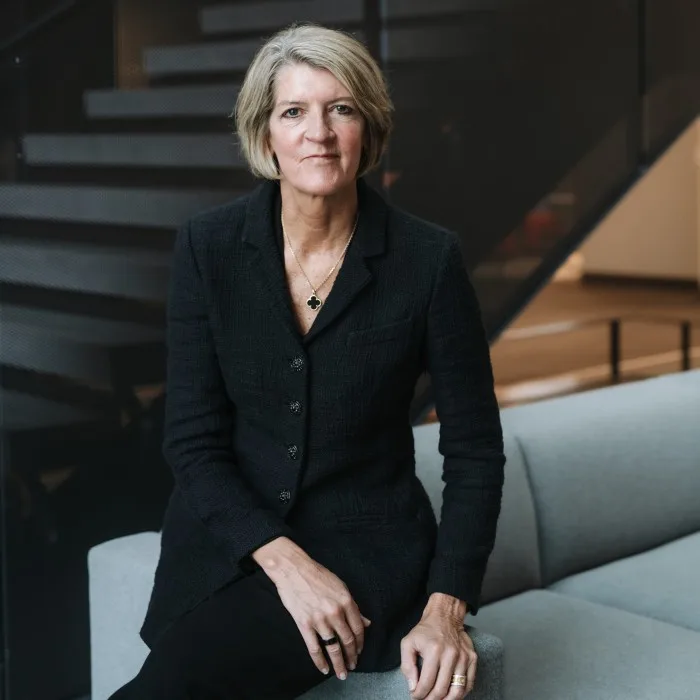
Talk about versatility. Beth Ford had worked at six companies spanning five industries, including Pepsi, Mobil and Scholastic, before arriving at Land O’Lakes. As CEO of one of the only cooperatives in the Fortune 500, today she’s answerable not to shareholders or investors but to thousands of decentralized owner-members. Half of the U.S.’s harvested acres flow through the Land O’Lakes network.
What does she see from her vantage? A gathering storm in American agriculture. She believes the country isn’t paying enough attention.
With bankruptcies doubling in the past year, median farm income is trending downward, and roughly 90% of family-owned farms and ranches rely on alternative sources of income to survive. While some operations thrive, less than 5% of farms are profitable. Growers have been hit especially hard.
To raise awareness, Ford, 62, has brought farmers to President Trump’s office to share their troubles. An outspoken advocate, she’s called for immigration reform, a new farm bill and infrastructure investment as she champions an industry contributing more than $1.5 trillion to the U.S. economy.
As Ford hopscotches between reviewing spreadsheets in the boardroom and taking meetings in farmers’ kitchens and barns, she confronts the daily realities of food insecurity and the threats to the sector’s labor supply (roughly two-thirds of U.S. agricultural workers are noncitizen immigrants). “There’s an intimacy to it,” she says of her work in rural areas. “In this job you know the families, you know these communities. It’s a real privilege.”
As a child and in college you had jobs ranging from detasseling corn to maintenance work and painting houses. How did that influence your thinking?
You put yourself in moments of discomfort, and then you just push through. The hard part wasn’t the, “Geez, why do I have to clean toilets?” There’s value in anything. I was grateful for the opportunity to earn some money. I know firsthand that working people and farmers don’t want handouts or pity. They want opportunity.
Share a memory from one of those jobs.
Well, for a while I was an elevator operator in college at Iowa State. People would have floor parties, get sick on the elevator, or they would break the elevator. They called me an elevator operator. But I think I was really a bouncer, like, “No, you can take the stairs.”
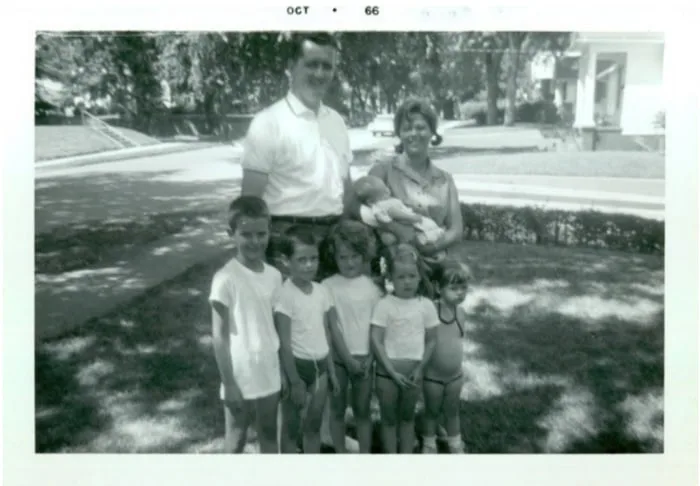
You were born in Sioux City, Iowa, one of eight children to a largely absent father who drove a truck and a mother who worked as a nurse. How did your family cope?
Money was more than tight. We didn’t have anything in the house. We got our bread from a day-old store, or would get a big box of the reject cookies from a bakery. My mom would make pancakes for dinner, the only thing she could afford. Or she’d say, “How fun are we? We’re having popcorn for dinner.” I didn’t know it was because she didn’t have anything to feed us.
You wore blue Mobil work clothes and steel-toed boots for much of the first decade of your career.
If you’re climbing on tanks in the tank farm, you didn’t wear dress clothing! It was always me and 25 guys. I started as a night warehouse foreman, and then I ran a tanker and barge dock in Boston. Then I ran the tank farm, the jet fuel farm, and the tanker and barge dock that feeds the trucking facility that supplies the jet fuel that goes into Boston Logan Airport. These are all part of the normal rotation at a company like that.
Can you maneuver a tractor?
One of the first things you do as a Mobil Oil trainee is you learn how to drive the tractor, turn it on, pull the lever. If there’s a fire that starts in the tank farm or on the property, you have to evacuate the site or move the equipment in case of a spill.
What did you learn from your mother?
With Mom, it was her resilience. She would say we don’t have a pot to pee in, but we have each other, and we have enough. We have a lot. As a nurse, then psychologist, then minister, she worked on body, mind and soul. I learned from her an ability to power through with a level of optimism.
Is teaching your three children humility hard because they’re being raised in a more financially stable home?
I say to them, if you date someone, and they are rude to the server at the restaurant, they’re not your person. That’s just unacceptable. We had our sons do landscaping stuff, digging ditches. People feed families doing this work. These are the folks who build the country.
Why do you think some powerful people treat others badly, as if they are above everyone else?
It saddens me. It really does, because we forget who we are, and not just oh, but there by the grace of God. I think real power is when you’re trying to help other people. I don’t know how somebody loses their way and forgets that. I always say you’re not a leader if you have no followers, and if you don’t care about somebody else, what are you doing?
What is luck to you in a professional environment? Some say it doesn’t exist, others say it does.
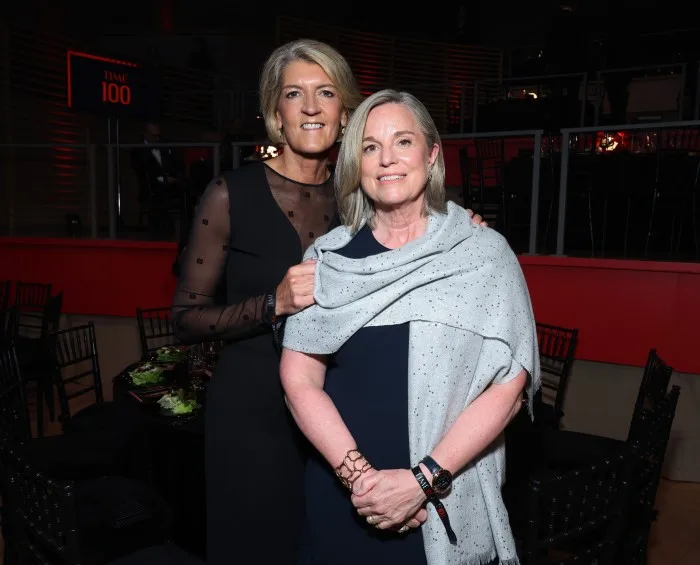
The first thing I say to interns is, “We’re not doing neurosurgery here, but the smartest thing you could do is build relationships, connect with people.” I’ve had the luck of having people in my life who have helped me, or who I’ve learned from. Take my wife, who is so measured. Many articles or speakers say the most important career decision is who you marry. This is a perfect example.
You are the first openly gay woman CEO of a Fortune 500 company. Tell me about your home life.
My wife is not shy about telling me when she thinks I’m wrong or off. We have the same values. We have the same upbringing. We share the same professional intention, given her current role as chief investment officer for the Minnesota Board of Investment, a role of service.
Presumably most farmers don’t have conference rooms. How do you work with them?
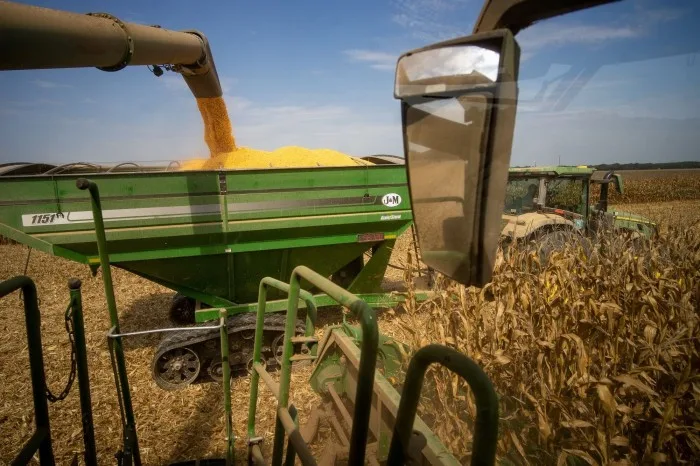
We simply meet in the barn. I work with growers on their land for our cooperative model. I give them a view of what I’m hearing from a policy perspective in Washington, what the implications are, what I’m hearing about trade.
How do you translate what you hear from farmers into action?
I think Americans don’t really understand the fragility of the food system, the amount of work that goes into it or the geopolitical instability. We don’t appreciate the resilience of our farmers. The most important work I can do is putting a voice to these issues, working on policy to stabilize the food system. The important thing from my perspective is to put a business lens through my corporate contacts on agricultural issues that affect us all.
One of the more challenging issues is that roughly two-thirds of U.S. agricultural workers are noncitizen immigrants.
Immigration is an economic driver as a growth engine for the economy. My responsibility is to continue to work the economic case for why immigrants are essential for the growth of the American economy. We can see that border crossings are down. OK, now onto the hard stuff that isn’t done. I think certainly in the administration and in the House and Senate, they’ve yet to say, ‘Let’s take up broad-scale immigration reform.’
How do you thread the needle between supporting farmers, and talking about border security and immigration issues, without putting yourself in the political crosshairs?
It all can be a lightning bolt. When I go to Washington—and I’m on both sides of the aisle in terms of farmworkers—there’s a universal understanding that most of the time American citizens don’t want or don’t apply for these jobs. This is not an argument that immigrants are taking jobs from Americans. If you look at the Central Valley of California, a lot of produce doesn’t get picked and ends up on the ground because they don’t have workers.
Tell me about bankruptcies—perhaps a significant reason farming has such a high suicide rate.
Farmers wonder, “Where would we go?” People don’t understand farmers. They think of it as a land transaction when they lose farmland or sell it. It’s a way of life. Farmers think to themselves, “This land and these animals have been in my family for four generations. I’m going to be the one that couldn’t make it?” It’s become harder for them to get an operating loan. They end up having to sell off a section of land, or they can’t rent additional land, and eventually they risk bankruptcy.
It sounds like things can go haywire fast.
If there’s an ICE raid, and if you’re a dairy producer and they have no staff, they can’t milk the cow. Then the cow starts to get sick, there’s no one to take care of them. Suddenly, they don’t have a business. It goes to the heart and soul of who they are in these communities. There’s so much emotion in my emails from farmers who tell me, “I feel as though I’m eating into the equity of my next generation, my children. I’m not going to make it.” They’re wearing not just the financial stress, but generations of expenses and expectations.
How do you split your energies between farm advocacy and the demands of running a multinational business?
I’m a believer in bringing friends to the fight. I feel a responsibility to help educate people. 70% of the counties in rural America are food insecure. My advocacy is broader than the farm or the farm equipment. It is a recognition that we must advocate for these communities, these families, for the appropriate investment, and that it’s in all of our interests to do that, not just in their interest.
Is agriculture your favorite job among the six industries you’ve worked in?
When I rotated from the docks to the trading floor in my first 10 years at Mobil, I could do the work and I could do the math. But working on farms with the working people of this country is my passion. They are my family, and I love working in the mess of the human condition. And what a gift. 40 years in, and all these experiences are coming to a point where I’m doing the most important work of my career.