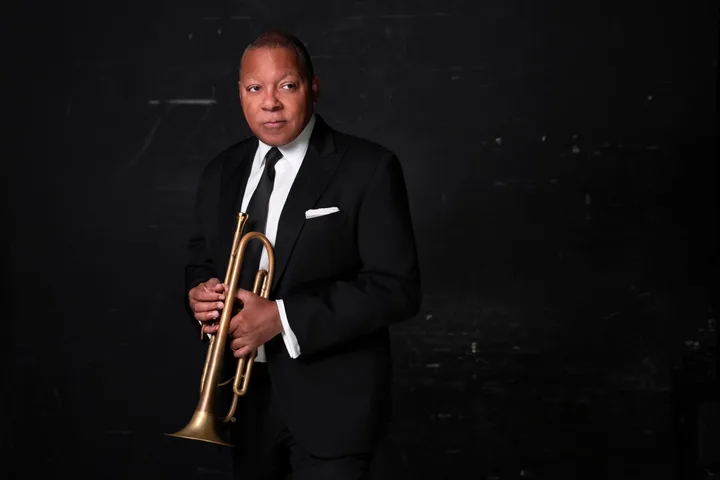
Wynton Marsalis learned early that jazz means keep on keeping on—even when the audience is thin.
“Seeing my father play for no people sometimes, I understood it’s not a game. I would walk into a gig. It would be three people in the whole place listening. I’d say, ‘This is the gig y’all had, man, for three months?’ But they kept playing.”
At 64, Marsalis is still playing and attracting appreciative crowds in his final season as the Managing and Artistic Director of Jazz at Lincoln Center in Manhattan, after a four-decade run. With 113 jazz and classical albums, he’s sold more than seven million copies worldwide.
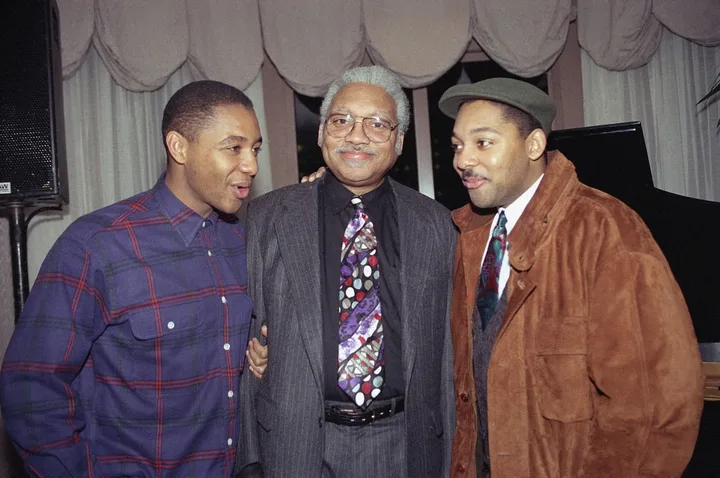
Growing up in New Orleans, young Wynton was exposed to jazz in late-night clubs from age 2, perched on his mother’s hip. Growing up with a celebrated father in the business would set him up to connect with giants such as Dizzy Gillespie, Art Blakey and Count Basie. “For a 13-year-old to hang with Sweets Edison and absorb his philosophy, how intelligent he was, and how much he believed in people. I was lucky.”
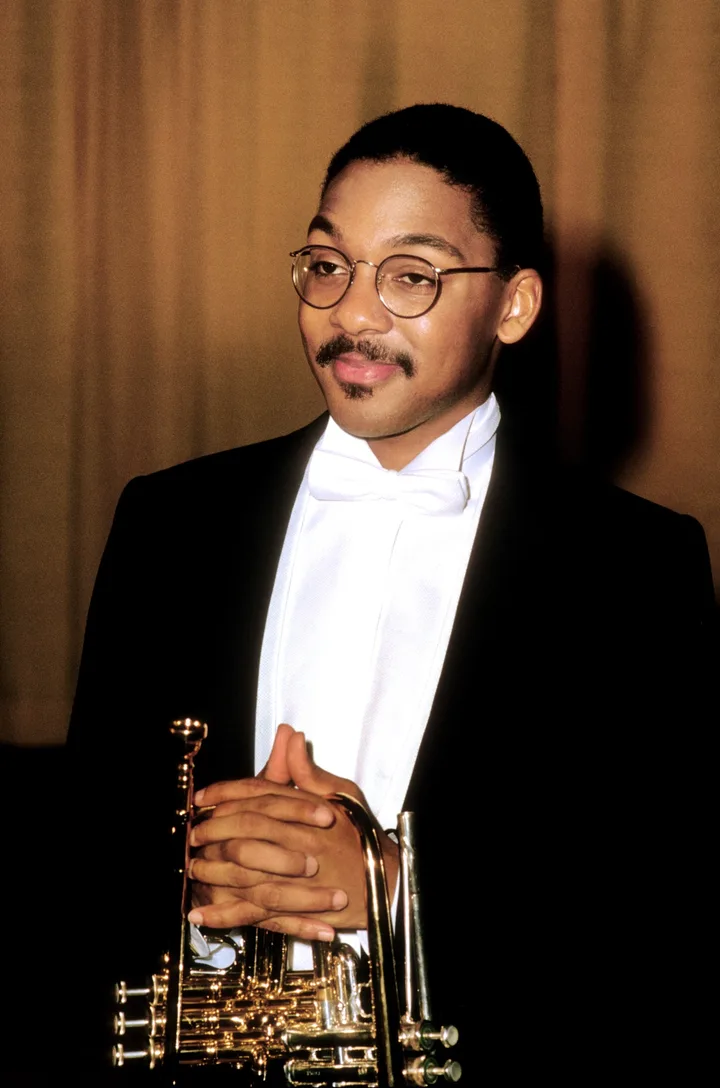
At 14, he performed with the New Orleans Philharmonic. His success, in part due to the mentorship of his older brother, jazz legend Branford Marsalis. After studying at the Juilliard School of Music in Manhattan, at 22 Marsalis became the first artist to win Grammys in both classical and jazz categories at once—a feat he repeated the very next year.
A scholar of jazz and blues, he explains how sorrow and ecstasy, trauma and resilience, all of life’s reverberations are felt in every note he plays. And how family shaped him as a person. “My mama had to focus on my fifth brother, who was autistic, and she was already focusing on all six of us, all boys. I think it was educational just to see his travail. His presence drove it home to me that, ‘Hey, we all come on earth to deal with different things.’ ”
The Pulitzer that Marsalis won in 1997 for his two-and-a-half-hour jazz oratorio, “Blood on the Fields,” was historic: since the jury started honoring music in 1943, they’d never recognized jazz, only classical composers. After Marsalis won, the prize was awarded to Duke Ellington, John Coltrane, Thelonious Monk and others. A poetic circle: Wynton followed the greats, and posthumously, they followed him back.
Where did your relentless drive come from?
It was always a natural drive for me. A lot of stuff came easy. What I tried to do, I generally could do, playing ball, fighting or school.
Did your wide-ranging aptitude come from confidence, or talent?
I felt like it was just a spiritual thing. I grew up in tumultuous times, the 1960s, we pretty much grew up in segregation. Everybody was really struggling. This was not Walt Disney. We all had different things we could do. And you work on things: if you have an aptitude for something, you’re more inclined to work on it.
Talk about your childhood resilience.
There was so much trauma everywhere. That experience helped me to survive when I left New Orleans and came to New York. But even in bad environments when I was young, people were cool.
Give me an example of how people were kind amid the despair of the 1960s.
My father and his friends struggled to play the music they wanted, but they always took me around jazz musicians, always in clubs. Not fancy clubs but real dives. I liked to be the only kid in a place with all adults really late at night. People were colorful and funny and very loving toward a kid.
What aspects of your childhood were less loving?
I was dealing with a lot of hostility. If you had an academic aptitude, you had to struggle. It wasn’t a little problem. It was a big problem. I went to one school, but it was segregated until [Martin Luther] King got killed. The first integration of my school was rough. My mama said, “If he sacrifices his life, I’ll sacrifice y’all for this.”
What role did luck play in your career?
I was very, very lucky. Just to be born to my parents, versus a lot of the kids I grew up with. One time, one of my friends that I played football with said, “Man, can I come sit in your house to see what it’s like to have a daddy?” I was lucky to have an older brother. I was always in the wake of him. So he got the full blast of whatever it was. And he loved me. I could be a handful to deal with.
Do you think you earned your luck in your work?
No, you earn the joy of working that discipline brings you.
There’s a joy to being undisciplined though.
My father and the jazz musicians of that generation were so open to people and to life. For example somebody’s getting high all the time; ok so they enjoy being high. Two members of his band died of heroin overdoses. They lived hard. And you’re not guaranteed anything. The struggle for freedom can be freedom against anything. It can be freedom against yourself. It could be freedom from drugs. It could be freedom from an oppressive situation. It could be a situation that you’ll never be free from.
Explain what happens when you and the band are playing as one, locked in improvisational magic.
Jazz music is an expression and understanding of how hard stuff can be. True to the blues, jazz musicians understand and deal with the hard facts of life in a very practical way. They accept toil and hardship with a style and a grace, elegance and fun. You take one musician like Charlie Parker or Thelonious Monk. The complexity of what they’re playing is unbelievable, and they do that on the fly, and the statement within it is still far, far heavier.
Tell me about the group dynamics.
Our great musicians spoke to the depth of the human spirit, and they believe in collective creativity. And so you get a power that’s much greater than your own, and you begin to look on other human beings with the type of awe and respect that their humanness deserves.
The signals between you and the other players can be incomprehensible to those of us listening.
Then you have to retreat with your mind into the music, and allow the music to express a kind of deep belief, like what the Negro spirituals express. It’s not the sorrow of it, or because the experience is sorrowful. It’s the depth of the meaning people find in life when they confront those types of unspeakable sorrows and pains. We’re not there for your heart to break. We’re there to give you a heartbreak that will heal the heart that is broken.
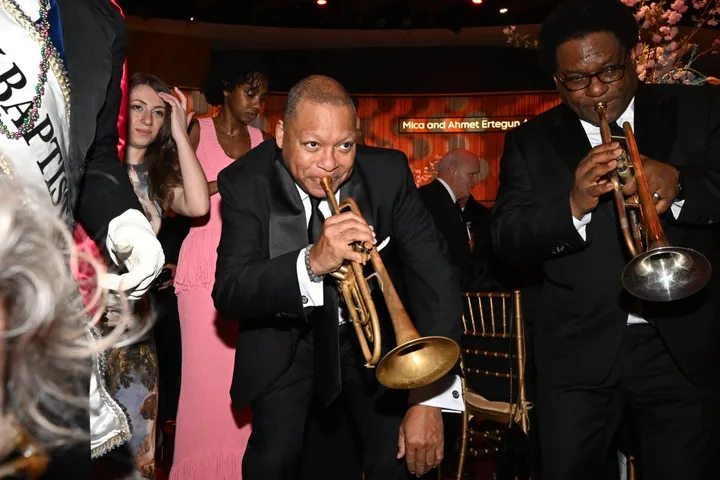
How are we to know that one section is meant as sorrow and the other as joy?
Jazz is the art of the invisible. It’s thoughts, feelings, the ephemeral things that pass very quickly. You may have a thought of something that makes you ecstatically happy, and then in the corner of it is some dread you have about something else.
Tell me about the pressure to be a great musician.
It’s hard to put yourself in the flow of the rigors of all the great musicians that came before you and in your time. You’re trying to be John Coltrane or Charlie Parker. Just wanting to be a part of that roll call is difficult. It can be very cold and lonely and hard out here if you choose to be a jazz musician.
What are some of the main obstacles?
You’re in a society that does not understand what you’re playing with no music education, where music has often been used for purely commercial ends. You’re trying to communicate something to a group that doesn’t want you to communicate to them, but, instead, wants you to simply imitate or channel angsty teenage feelings—that’s really childish. And you’re working in a place that does not reward excellence. It rewards foolishness.
Why do artists who haven’t yet found an audience keep trying?
My father never complained. I remember when I was like 11, this club was closing at 2:30. It was like two o’clock. Nobody was in the club, and I went to my daddy and said, “Let’s go home, man. Nobody is in here.” He never, ever told me to listen to music. But he looked at me and said, “Why don’t you sit your ass down and listen to some music for a change?” To this day, I think about him playing alone until his set finished. Why would somebody who could play as good as my father sit in a club and play for no one except their son? Because when something means something, it can mean something even without an audience.